Oct 20, 2012

Field Guide to the Masai Mara butterflies published!

Planning a visit to the marvels of Masai Mara Game reserve? Why not bring with you a copy of the newly published guide to the butterflies. Fifteen pages, six color plates, over 40 of the most common and beautiful butterflies of the Mara region fully illustrated!
Available for free from the authors, just write us and we'll send you a PDF

Oct 15, 2012

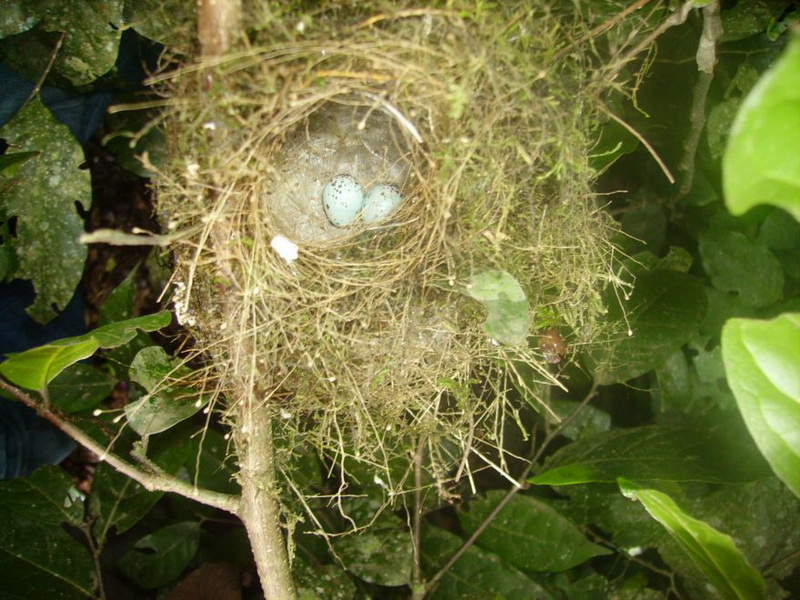
Nest of the Taita apalis discovered!

Lawrence Wagura, a student who is receiving one of our fellowships, is studying the Taita apalis, one of the rarest birds in the world. Its entire population is no more than 300 birds, living in seven small forests of just a few hectares each.
During his work in the forest, Lawrence discovered the apalis' nest - which had never been observed before. This is major step forward in saving this critically endangered species. A paper written by Lawrence has been published on a scientific journal (Bull ABC 18(1):42-46). Congratulations to Lawrence and keep up with the good work!

The apalis's nest, deep in the forest
A male Taita apalis
Lawrence and Dr Liv in the Taita Hills forest


Sep 21, 2012

Njabini workshop grows...

 
 The Njabini woolspinning workshop is one of our Kenyan partners. Here are some photos that I have just received form them. The photos document the work at Njabini, the range of wool products that they weave and, above all, the steady growth of this small eco-business that we have been supporting since 2007

Aug 28, 2012

Dr Liv visits the Mara!

It was just great to have the opportunity to visit the Maasai Mara Reserve again. I had not been there for many years. The Mara is one of the pearls of Kenya's protected areas system, and not for a chance. It is one of the best places in Africa to see wildlife.

Aug 17, 2012

The Small Field Guides to the East African Wildlife

One of the main problems for the conservation of African wildlife is that many Africans do not have access to books that could help them to identify the species of plants and animals that are found near their villages. This means that many villagers and school students know very little or nothing about the environment. And of course, nobody is interested to conserve something that he or she does not know.
Working in Kenya, I often noticed that local people have a keen desire to learn more about wildlife. For this reason, I began to write a series of "Small Field Guides" that contain information and photos of the commonest animals and plants. Each field guide is focused on a specific area where I have worked, and whose wildlife I know well.
Each Small Field Guide can be printed cheaply or photocopied, and then distributed to the schools or to people who have an interest in wildlife. They can also be of interest to tourists.

Please contact me to obtain copies.


Jan 15, 2012

Consuntivo economico 2011 - Financial report 2011

Carissimi
Nel 2011 abbiamo finanziato 6 attivita': (1) otto borse di studio annuali per studenti delle scuole primarie e secondarie (2) tre borse di studio annuali per studenti presso il Museo Nazionale del Kenya (3) la riforestazione degli Aberdare mountains insieme al gruppo Kawama (4) la costurzione dei banchi della scuola di Temow nell'ambito dello Mbara Community Project (5) la costruzione di un gruppo di latrine presso Scuola di Mugumu-ini a Kinangop (6) corsi di aggiornamento per i membri del Njabini Woolspinning Workshop. Maggiori dettagli sulle attivita' del 2011 sono QUI
In totale, nel 2010 abbiamo ricevuto 18 donazioni per un totale di 7.469 Euro, a cui si somma il residuo di cassa del 2009 (911 Euro). La cifra disponibile è stata dunque in totale pari a 8.380 Euro, il che rappresenta anche per quest'anno un incremento del 40% rispetto all'anno precedente. Il che significa che, a questo ritmo, in capoa meno di 150 anni le Borse di Studio Africane raggiungeranno le dimensioni della Fondazione Gates :-)
Le spese effettuate nel 2011 ammontano a 6,963 Euro. Rimane quindi al 31 Dicembre 2011 un residuo di cassa di 1417 Euro, che sara' speso nel 2012.

Pace e bene dunque a tutti dal sempre vostro Dr Liv


English summary:

Dear All,
in 2011 we received 18 donations for a total of 7,469. Expenses amounted to
€6,963 according to the table below. You can find a description of the six projects that we funded HERE.  The unspent balance on 1st January 2012 amounts to 1,417, which will be spent in 2012.


Peace and Happiness to everybody!

Residuo cassa al 1 Gen 2011 - Balance on Jan 1st  2011+911
Donazioni ricevute nel 2011 / Donations received in 2011+7469
Scholarships/borse di studio for primary and secondary schools-1148
Scholarships/ borse di studio National Museums of Kenya-3764
Tree planting in Aberdare forest/Riforestazione Monti Aberdares-165
The Mbara Community Project-300
Mugumu-ini School/Scuola di Mugumu-ini-674
Njabini woolspinning workshop-886
Commissioni bancarie e spese/Bank fees and expenses-26
Spese totali 2011 / Total expenses 2011-6963€
Saldo al 01 Gen 2012 / Balance on 1st Jan 2012+1417€

Dec 16, 2011

Resoconto delle attivita' del 2011 (English version below)

Cari amici, giusto per fare le somme dell'anno ormai quasi trascorso, ecco quello che abbiamo fatto con le donazioni ricevute:

  1. Borse di Studio per gli studenti Samburu. Quest'anno abbiamo finanziato gli studi di 8 studenti delle scuole primarie e secondarie del distretto Samburu, uno dei piu' poveri del Kenya
  2. Borse di Studio in collaborazione con il Museo Nazionale del Kenya. Finanziamenti parziali o borse di studio della durata di un anno per 4 studenti del Museo del Kenya impegnati in attività di conservazione della natura nel paese
  3. Una borsa di lana tessuta a Njabini
  4. Laboratorio della lana di Njabini. Margaret Mbatia, uno dei membri del gruppo, ha frequentato un corso di ragioneria che la aiuterà a tenere in ordine i registri contabili e le spese del laboratorio, che grazie al nostro aiuto e' in continua crescita ed impiega ormai stabilmente o part-time ben 15 persone
  5. Scuola di Mbara. 30 banchi di scuola acquistati per i piccoli studenti che prima stavano seduti per terra
  6. Scuola di Mugumu-ini. Un nuovo blocco di latrine e' in costruzione alla scuola, che con 500 studenti proprio non poteva più permettere che i pargoli facessero la loro santa pipi' sotto l'unico albero disponibile in un raggio di mezzo chilometro
Grazie a tutti quanti hanno contribuito, ed in particolare alle generosissime donazioni di David Fox e famiglia, di Antonio e Giulia Thellung e di Andrea Borghesio! Grazie inoltre alle associazioni CEPA (Conservation des Especes et Populations Animales) ed a Muindi ONLUS

Dec 14, 2011

A summary of the activities of 2011

Hello all. This is a quick summary of what we did in 2011:
  1. Scholarships for Samburu students. We funded eight students of the primary and secondary schools of the Samburu District, one of the poorest districts of Kenya
  2. Scholarships in collaboration with the National Museums of Kenya. Partial or complete funding of 4 one-year fellowships to University students attached to the Museums of Kenya, where they carry out conservation activities on Kenya's biodiversity
  3. The Temow School at Mbara (Photo by TJ Hummerston)
  4. Njabini wool spinning workshop. Margaret Mbatia, one of the group members, was sponsored to a one-month accounting and bookkeeping course that will help her in the management of the workshop that is steadily growing and now employs 7 persons full-time and 8 part-time
  5. Mbara School. 30 desks purchased for the young students who now are no more sitting on the ground
  6. Mugumu-ini School. A new latrine block is being completed at the school. With 500 young pupils, the school could really no more afford them to pass water under the only tree in a radius of 500m from the building
Many thanks again to everybody, in particular to the very generous donations of David Fox and his family, of Antonio and Giulia Thellung, Andrea Borghesio, to CEPA (Conservation des Especes et Populations Animales) and to Muindi ONLUS

Oct 12, 2011

A new forest discovered in the Taita Hills!

The Taita Hills of Kenya are a small range of mountains and a paradise of biodiversity. The forests in the Taita have evolved in isolation for perhaps 10 million of years, and evolution produced numerous species that can only be seen there and nowhere else in the world. One of these species is a small bird, the Taita apalis, whose population is reduced to just a few hundred individuals.
The Taita apalis, Apalis fuscigularis
Lawrence Wagura is one of the students that has been sponsored by our small fellowships. Lawrence works with the National Museums of Kenya, and is studying the details of the life history of the Taita apalis, which is a critically endangered species, because it is estimated that more than 95% of the original vegetation of the Taita has been lost. Currently less than 500 hectares of forest remain, scattered in twelve small fragments, some of which are less than one hectare in size. In September 2011, Lawrence and I, during a week of field work in the Taita, stumbled in a most astonishing and welcome discovery. A new forest, never visited by scientists in the Taita! The site, called Msidunyi by local people, escaped detection up to now as it is completely surrounded and hidden by a large plantation of non-indigenous trees. Msidunyi contains about 7.2 hectares of indigenous forest with few signs of human disturbance.

Lawrence birding in Msidunji, October 2011
Preliminary data suggest that Msidunyi is one of the biologically richest forest fragments of the Taita Hills, one of the most important findings was that of a new population of the Taita apalis. We do not know exactly how many individuals of the apalis might be in Msidunyi, but in any case this is a very important news for a bird whose entire population might be now less than 200 individuals! It is surprising that it escaped detection up to now considering that several biological surveys have been carried out in the area in the two decades. Based on size alone, Msidunyi is the sixth largest forest in the hills. More detailed biological surveys are needed to confirm the conservation value of this small forest patch, but the presence of a diverse flora and fauna, including endemic and globally threatened species, suggest that Msidunyi is an important refuge for rare species and a stepping stone for preserving biological connectivity between the isolated forest remnants of the Taita Hills.

Aug 26, 2011

Back to school ! Si torna a scuola !

Since I will be in Ngilai for the entire month of August, I have been able to meet with our students here in the village. This is vacation time for Kenyan schools, so all of them are here in these weeks.
As you remember, four students are receiving a small fellowship that pays their school fees. Thanks to these small donations, Naomi, Simon, Danson and Thomas have been able to attend secondary school. This would have been very unlikely without our help, so we can be proud of ourselves :-)
Naomi, Danson, Simon and Thomas will soon begin the fourth and last year of school, and we hope that we will be able to support more students of the Ngilai village to school in the coming years.  Meanwhile, this year's donations allowed us to sponsor another student (the fifth). Damaris is a 15-year old girld, she is currently attending the first year of secondary school at Mwalimu Girls Secondary School in Meru, and we wish her all the best.
Damaris, Naomi, Simon, Thomas and Danson

(Traduzione). E' agosto, e come sempre sono a Ngilai molto indaffarato a torturare uccellini. Ad agosto in Kenya le scuole sono chiuse, e tutti i nostri studenti sono qui nel villaggio. Fra poco Naomi, Danson, Simon e Thomas inizieranno il quarto e ultimo anno di scuola, e in tutta sincerita' vi posso garantire che senza il nostro aiuto non avrebbero potuto raggiungere questo risultato! Evviva!
Le donazioni di quest'anno sono state generose, e ci hanno permesso di aiutare una nouva studentessa, Damaris, che frequenta il primo anno alla Mwalimu School di Meru. Molti auguri a lei e ai suoi amici!